


News
3. March 2026
4 minutes read time
Our PCR Canister: 100% recycled material – recycled in-house
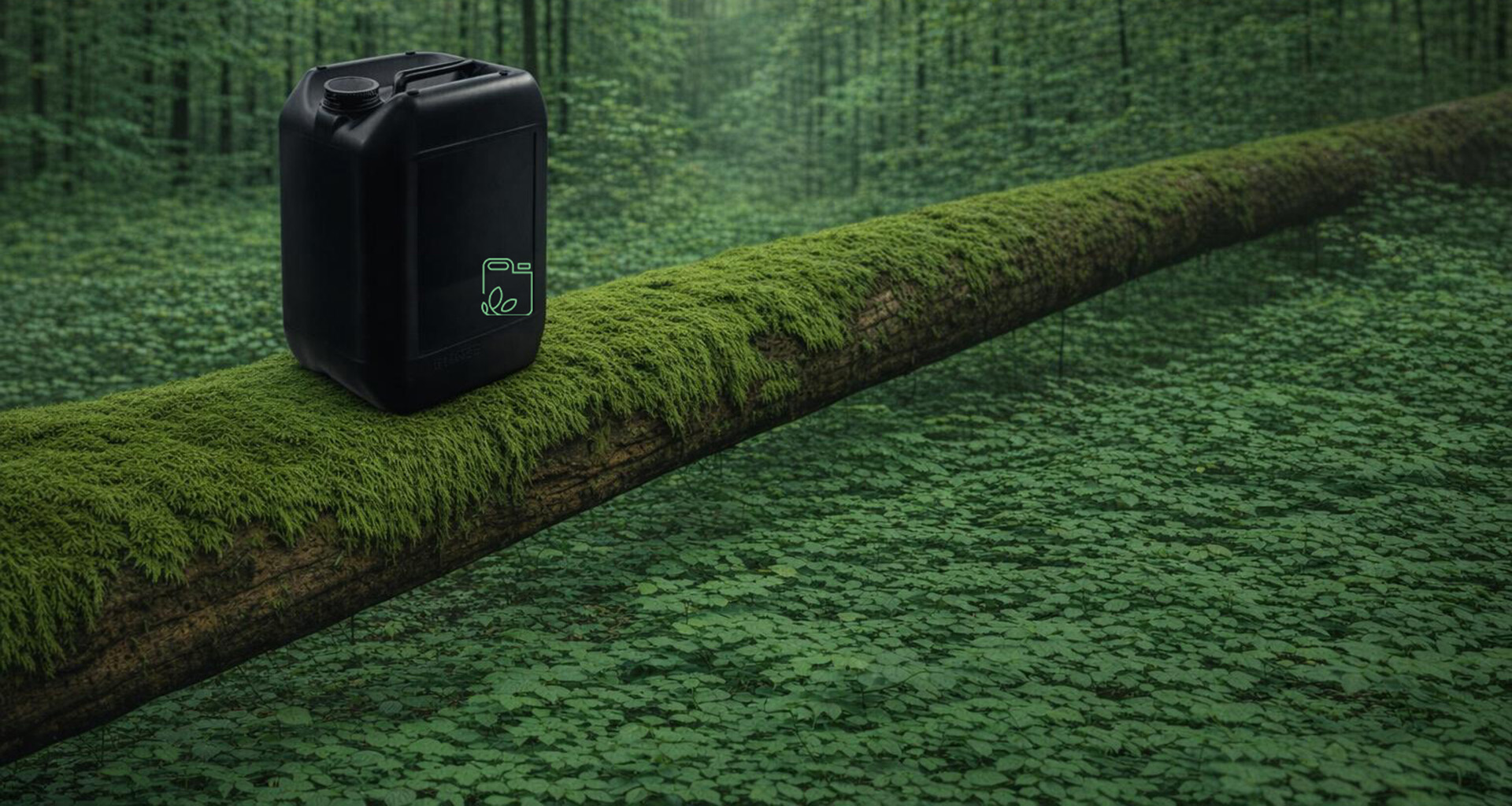
Muri, 3 March 2026 – Industrial packaging has to do two things at once: protect products reliably and meet rising expectations around sustainability. At Fischer Söhne Extrusion AG, we address this challenge with a practical step toward circularity: our PCR (rHDPE) canister made from 100% in-house recycled material—regranulated from our own production scrap and returned to the process.
This solution is built for customers who want to reduce virgin plastic usage and move toward circular economy targets—without sacrificing performance in daily handling.
What “PCR” and “rHDPE” mean
PCR (Post-Consumer Recycled) describes recycled material that has been collected, sorted and recycled after consumer use, while rHDPE refers to the recycled polymer type (recycled high-density polyethylene). In practice, both terms are frequently used together in packaging discussions and specifications.
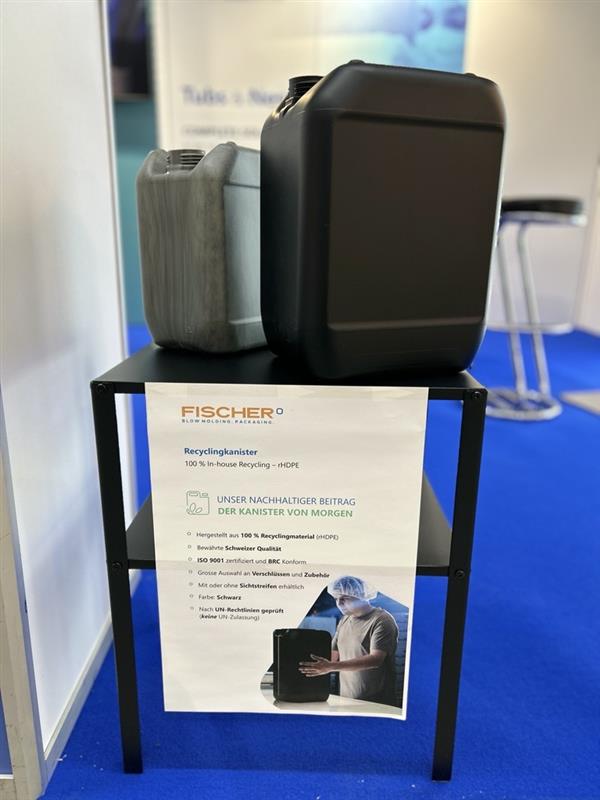
Why PCR (rHDPE) canisters?
Plastic packaging plays a vital role in protecting goods and reducing waste—but conventional plastic production is resource-intensive and contributes significantly to CO₂ emissions. Using Post-Consumer Recycled (PCR) HDPE (also called rHDPE) helps close the loop and reduce the environmental impact of industrial packaging.
Regulatory and market requirements are moving in the same direction. The EU is setting ambitious goals, including mandatory recycled content in plastic packaging (e.g., 30% by 2030) and stronger circular economy rules.
Why PCR canisters matter
Plastic packaging protects goods and helps prevent waste. At the same time, conventional virgin plastic production is resource-intensive and contributes significantly to CO₂ emissions. Using PCR HDPE (rHDPE) helps close the loop and reduce the environmental impact of industrial packaging.
In addition, the EU is tightening requirements around recycled content and circular economy principles—making recyclable concepts and recycled-content packaging increasingly relevant for many supply chains.
The sustainability impact: CO₂ savings
Beyond compliance, the climate impact is a major driver. In our material comparison, rHDPE can deliver up to 30–75% CO₂ reduction per kg of material, while remaining technically suitable for industrial use.
The same overview shows typical CO₂ values of ~2.0–2.5 kg CO₂/kg for virgin HDPE versus ~0.4–0.6 kg CO₂/kg for recycled HDPE (PCR), resulting in savings of ~1.6–2.1 kg CO₂/kg.
Our solution: the 100% in-house recycled canister
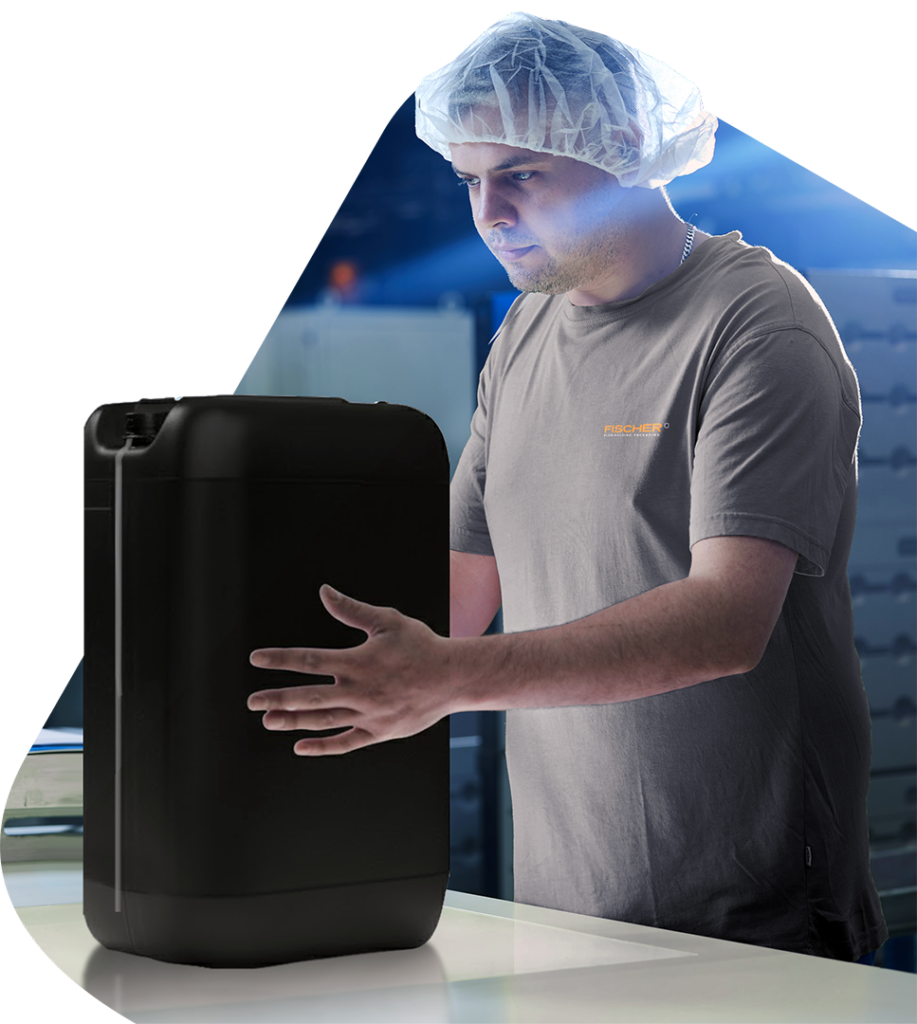
Our mono-layer recycling canister is produced from 100% regranulate recycled in-house. It is built on proven Swiss manufacturing quality and comes with a wide range of closures and accessories. Production is supported by certified and established management systems: ISO 9001 certified.
Key characteristics at a glance:
- Mono-layer recycling canister
- ISO 9001 certified
- Wide range of closures and accessories
- 100% in-house recycled regranulate
- Limited color selection
- Visibility stripes available upon request
- No UN approval (depending on application requirements)

CO₂ impact: a meaningful lever
Switching from virgin HDPE to recycled HDPE can deliver significant CO₂ savings. In our internal comparisons, recycled material shows substantially lower CO₂ emissions per kg than virgin HDPE, translating into savings on the material level.
Where PCR canisters create value
Our PCR (rHDPE) canister is a strong fit for customers who want to:
- reduce virgin plastic content in industrial packaging,
- demonstrate measurable progress toward circularity and ESG targets,
- keep packaging robust, stackable, and production-ready,
- work with a supplier that can support selection, testing, and implementation.
Challenges and what to consider
PCR solutions are not “one size fits all.” Regulatory requirements—especially UN approvals and food contact certification—can impact feasibility and product selection.
That’s why we discuss the right approach based on your use case, including material strategy, labeling/traceability expectations, and the required approvals for your market.
Looking ahead
Circular economy progress rarely happens with one single change. It happens when packaging, material, process capability, and customer requirements are aligned. That’s why we treat PCR solutions as a collaborative engineering topic—focused on feasibility, product performance, and compliance.
Let’s talk about your application
If you are evaluating PCR (rHDPE) packaging, want to reduce CO₂ footprint, or need guidance on feasibility under your regulatory requirements, our team in Muri will be happy to support..
Kontakt: info@fischersoehne.ch
Fischer Söhne Extrusion AG — Blow Molding. Packaging.
See our other content
News
22. January 2026
3 minutes read time
Swiss Plastics Expo 2026: Community, circularity, and hands-on plastics know-how
Read article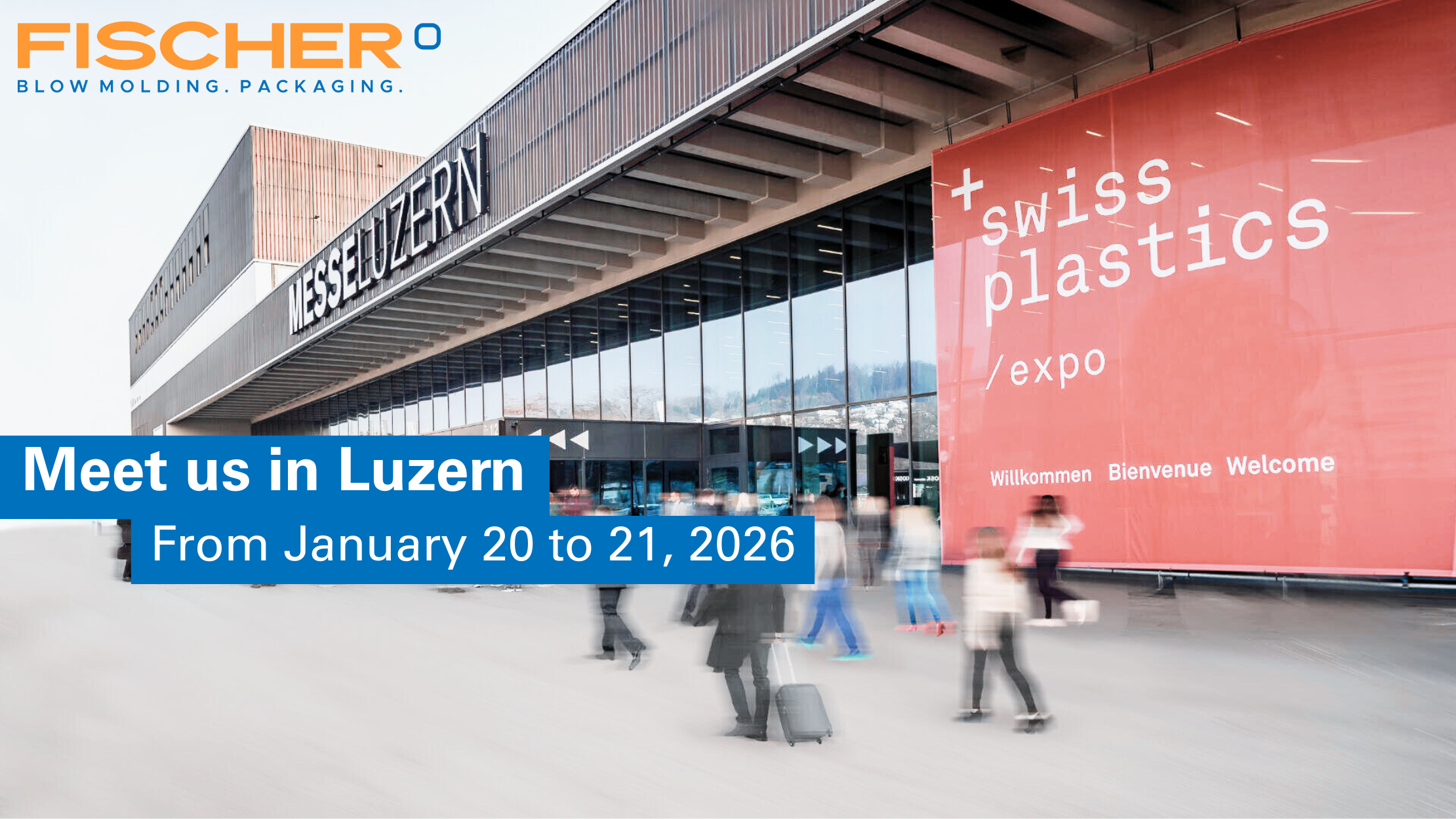
Events
28. October 2025
1 minute read time
Fischer Söhne Extrusion AG together with Fischer Söhne AG at Swiss Plastics Expo 2026
Read article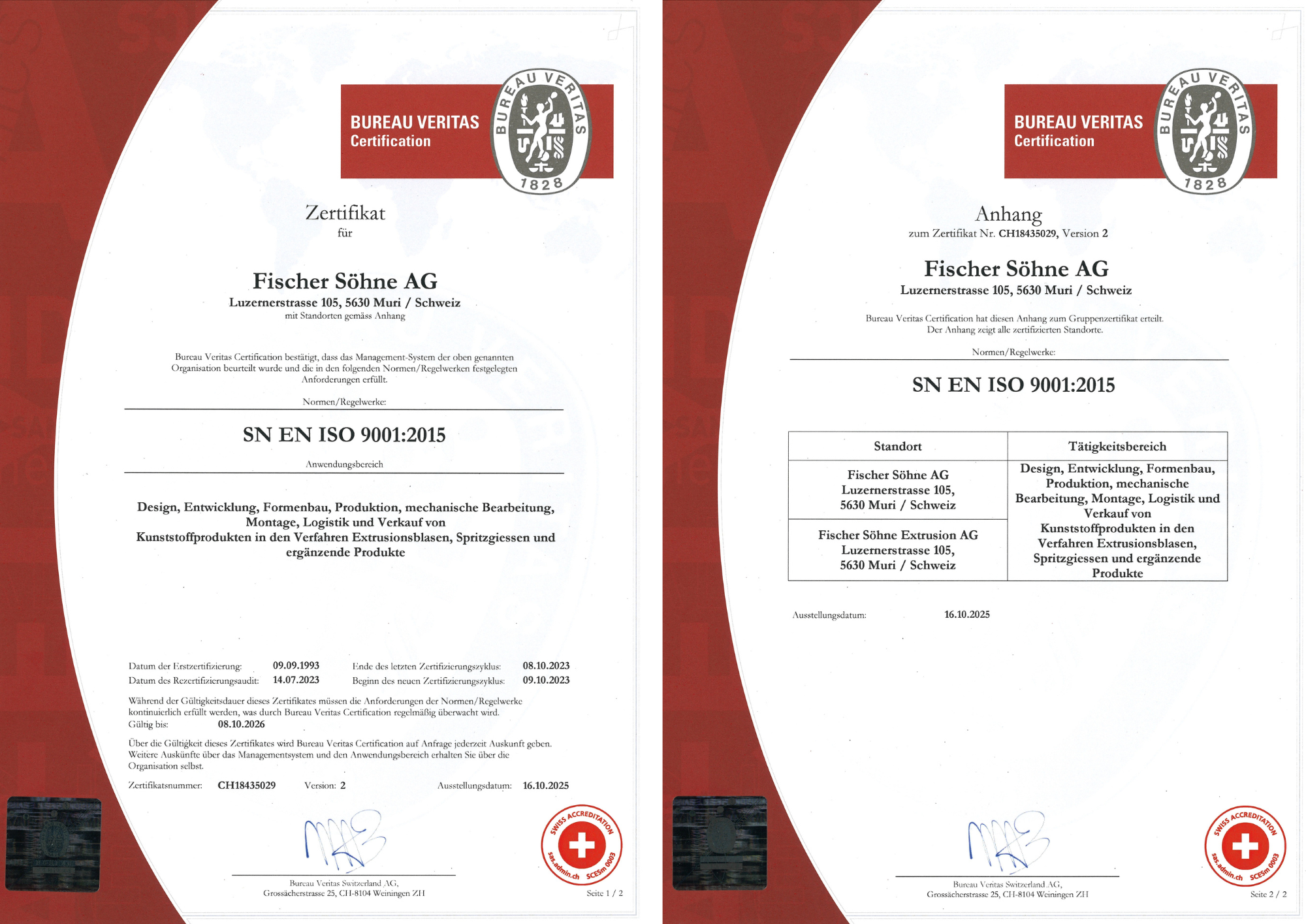
Nicht kategorisiert News
16. October 2025
1 minute read time
ISO 9001:2015 – Certified quality for extrusion-blown packaging
Read article
News
1. July 2025
1 minute read time
Introducing Fischer Söhne Extrusion AG: Focused on Blow Molding Excellence
Read article
News
11. June 2025
4 minutes read time
From Concept to Series Production: R&D and Contract Manufacturing at Fischer Söhne Extrusion AG
Read article
News
28. April 2025
1 minute read time
Fischer Söhne Extrusion AG supports young talents as a sponsor of “Schule trifft Wirtschaft”
Read article
News
6. March 2025
1 minute read time
We are delighted to welcome Daniel Stratenhoff as the new CEO of Fischer Söhne Extrusion AG!
Read article/10


